Worry Mode and Constructive Choice
How do I know I am worried? There’s the mental chatter, of course, and forehead tension, limited respiratory support, narrowed visual reception and a general sense of withdrawal from the world. I am spinning a narrative (so many potential threads these days), reacting to said narrative threads, and narrowing and shortening myself in the resulting spin. Where is my choice in response when so much is worrisome?
A good beginning is choosing levels of stimuli (news/information). Knowing enough news/information to remain effective but not so much as to paralyze response is an ongoing balance of choice. It may be a daily, hourly decision to know what level of news/information input allows conditions for your best response. You can refuse news and information with ease. Making that decision provides a sense of your own constructive choice. Knowing what is too much information for best elastic response is key to making best decisions, thinking with your entire self, and prioritizing the unified field of self over gaining any end. You gather data from your own experience, make choices, proceed and gather more information. Helplessness recedes once you are your own research system. You are no longer at the mercy of media.
The above assumes the essential and complex step of choice in response, which requires noticing the many cues (sensation, emotion, thought, muscle) in the first place. We know we are experiencing an emotion due to physical signals which we define mentally and interpret from belief, prior experience and societal framework. There is no point controlling the emotion we identify, as that is already flooding our entire system of self. But, we do have a choice in response to emotional experience.
- I notice mental chatter that draws me inward. I can decide to quiet chatter and attend to the world outside myself. I can ask for wide, soft eyes, wide receptive ears, connection to the ground. I can ask for quiet in my entirety.
- I have narrowed and shortened into a “startle pattern”: arms and legs pulled inward, jaw tensed, breath restricted. I take a moment to request all four limbs to undo (not relax or deaden, undo) out of my entire lively back, and for best possible elastic throughout myself.
Is any of this perfect or have perfect results? Of course not! We learn by experience, in increments, by loops of sensations, thought and emotions. We can’t control the loops, but we can choose our response to the loops, and thus remain effective in these weird pandemic times

The window of impossibility, with curiosity as means
Dynamic non-interference is a key skill for Alexander teachers and students. Over time, and with guidance, we learn to more accurately notice unnecessary efforts, and to cheerfully request a new response. We ask how much less we can do, fix, or be right as we consider activities, whether those activities be primarily mental, physical or emotional in emphasis. We bring our entire thinking, emoting, moving, sensing instrument to everything we do. The more we request a unified field of self, the more solutions arrive. The less we hold the instrument into a fixed or “right” mode, the more new experience we can allow, the more quietly surprising solutions we can welcome.
Of course, it’s hard work to allow activities to do themselves. We have to actively, skillfully get out of the way. Often, it seems impossible to rise on the toes, teach an online lesson, engage in political discussion or speak through a cloth mask without the tensions associated with those activities. The link between an associated set of muscular/mental/emotional tensions and achieving the activity indicates that the activity is impossible without those tensions. We believe a certain amount of doing is necessary.
And thus, the “window of impossibility” beckons. We have an opportunity to cheerfully refuse (no finger shaking here, this is exploration, not a test) what seems necessary, so that a new solution can arise to our big planetarium brains. The stimulus is to do something. But perhaps I prefer to undo, to allow time (even a micro-second) for a more unified self, and to receive the world outside myself. Being right stiffens the neck. Fixing myself just fragments me into parts and pieces, and rushing to do something deepens the doing/fixing battle and provides no new data. I can go quickly without hurrying and go slowly without freezing if I allow that dynamic interior permission of time. Welcoming curiosity, allowing gravity and the tidal movement of breath as connection to the world shifts brain state, improves postural support and broadens sensory perception.
Happy curiosity becomes a means, and the window of impossibility holds interest and mystery rather than defeat and frustration. We learn by undoing to proceed elastically to doing, without doing too much.
Allowing new response
Public health and epidemiology experts have recommended wearing cloth masks in public settings in order to significantly reduce transmission of SARS-CoV-2. A mask doesn’t just decrease infection potential for the wearer. A mask reduces the transmission by asymptomatic people to others. If we all wear masks when out and about, we care for each other, our communities, and thus ourselves.
Many pedestrians (runners and walkers) share the streets and sidewalks during my daily walking miles. Most wear masks and attend to physical distancing. Others, not so much. I can’t do anything about the non-mask wearing, too close to me walkers and runners, but I can undo my habitual response.
I spoiled a portion of an otherwise lovely walk with a lovely friend furrowing my brow, tightening my neck and accelerating all the signals of frustration and anger while we encountered the unmasked and un-distanced. Surely other choices were available.
Maybe, given the Alexander skills that can apply to all life’s activities, I can even be angry without all the non-productive associative habitual reactions, like brow, neck and respiratory narrowing. Maybe I don’t have to disconnect from the ground. Maybe I can even be effective once I notice anger, instead of trapped in my tightening response, accelerating heedlessly.
Dynamic non-interference and indirect means may provide guidance and possibility. Suppressing anger or pretending I am not angry gets me nowhere. Why pretend I am not having an experience? Yelling at the unmasked is tempting but likely increases tensions. What I can do is choose what not to do.
I don’t want a furrowed brow, a tight jaw and neck, or restricted interior volume. I want my whole elastic self. I want to see the world, enjoy the season of birds and blooms, remain effective, learn in the challenge, bring increments of reason to bear on my manner of response
.
Spatial thinking: screen use
Most of us are working, socializing, teaching and learning via electronic devices instead of in shared actual space. The increase in screen time brings new demands to the use of the instrument of self.
With our Alexander tools of refined intention and attention, we can find new means to rise to these increased demands. While I am teaching online Alexander lessons, I notice an urgency to teach well and to provide some shred of normalcy in these abnormal times. Urgency easily tilts to end gaining, as I crane toward the screen, and reach for sound and vision. By narrowing my attention to reach for sound and vision, I tire myself and diminish an overall elastic response.
Dynamic pauses are thus needed for me to have best use of self in my problem solving/teaching mode. I remind myself of the room around me, the floor under my feet, chair under my sitting bones, the wave of breath that supports and enlivens me. The sound may come from speakers, but it comes via vibrations to my ears and brain. I don’t have to go fetch it. Watching my student on the screen easily tires my eyes until I remember that light waves come through the lenses of my eyes and are interpreted by my deeper brain into vision. The more frequently I think of my whole integrated back “seeing”, the less tired my eyes become. I receive and welcome instead of yearning and straining.
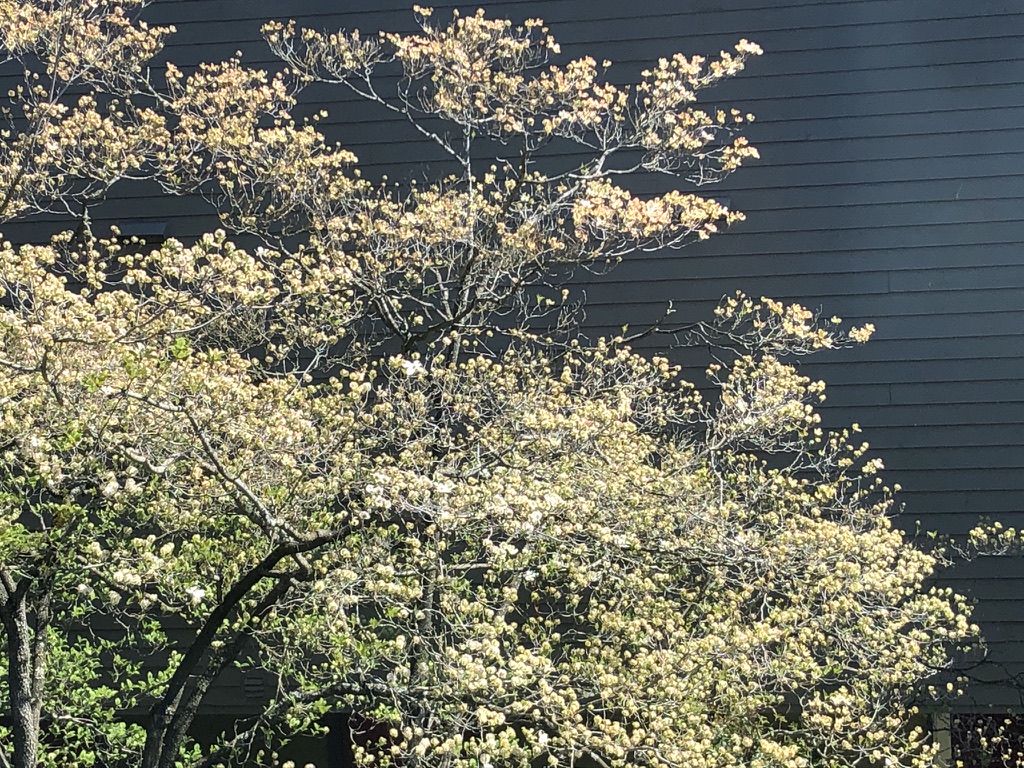
These intentions require frequent micro moments when I prioritize a welcoming curiosity to straining at the expense of ease. If I softly include the room around me, the view from my office window (dogwood nearly in bloom), the sounds of scrub jays in the court yard while I listen to and watch my student, my eyes, hearing and voice work less and receive broader support. Solutions arise with an ease that is sometimes surprising, as though I didn’t think of them, they thought themselves. All I did was get out of the way.
The screen may be a necessary interface for now, but we can continue to refine our own means as we use the screen. We have choices in our spatial attention that potentially improve our condition of self, and thus our problem solving skills. We can decide what we want, then make the relevant choices. We can’t change current demands, but we can allow ourselves the time to change responses.
Conditions and means: problem solving
My training and decades of experience as an Alexander Teacher involved using my hands to both know and convey information. AmSAT certified Alexander Teachers train in a highly dedicated manner to be able to use their hands as an entire instrument of self skill.
Given urgent concerns for community health, online lessons are my sole current option to keep students engaged and supported. Skills learned in teaching with my hands have had to shift gears. Now, I use my eyes and my words, as well as my students’ experiential reports, to understand and guide. The “contact” means may have changed, but the use of myself requires the same principles. My entire condition of self, informed by dynamic non-interference and quiet, lively attention, provides surprising means for problem solving. I have to wait and welcome, allow time and attention.
My intention is to bring the same use of self to virtual lessons as to hands on lessons. After all, I bring this instrument of self to everything that I do.
When I can quiet and light up all of me while watching a student on a device, I can welcome and allow solutions and words for problem solving. It’s a steep stamina curve to relearn and update entire use with radically changed conditions, but that is the current tuition.
We rise to demands.
Active and welcoming curiosity
Our primary tool in proceeding constructively into any activity, be it primarily physical, mental or emotional, is our attention. The quality, tone and expansiveness of our attention determines co-ordination and organization of the entire instrument of self in activities from mundane to complex. Any activity offers an opportunity for welcoming curiosity. The skill of an active and receptive curiosity, even a cheerful not knowing, can create the ground for new solutions, insights and discoveries.
In the familiar action of moving from sitting to standing, we probably believe we know the “right” and “wrong” means. We may be eager to collect the one bit of evidence out of our entire experience that indicates “wrongness”. An incurious use of attention would note interference and attempt change of that specific detail. Attention has narrowed, and likely become critical and more fraught. We want to be right, so we go about righting what we believe to be wrong. Struggle ensues, failure looms, frustration shadows our attention. We’ve narrowed to a a keyhole of perception, a fragment of the view.
But if we allow the time to acknowledge the larger picture of our entire self supported by gravity and the wave of breath, if we curiously and happily decide not to know a specific cause or solution, or even what a sensation means, we can play with welcoming a previously unknown solution. We have time to see and hear the world outside ourselves, to request what we don’t know instead of what we do.
It’s a spiral of curiosity and welcoming. I may not know how to proceed, but my instrument of self is far more complex and changeable than my need to be right. Perhaps I can allow the evidence of interference to arise, note the data, avoid direct engagement with the data, decide what I don’t want, and actively welcome a new and more elastic experience. It’s not what I do, it’s what I don’t do. It’s dedicated work to allow things to be easy, but it seems worth the effort.
The ground stands me. My primary activity was to welcome a larger attention and get out of the way. Curiosity becomes the means, and knowing answers in advance loses appeal.
The activity does itself.
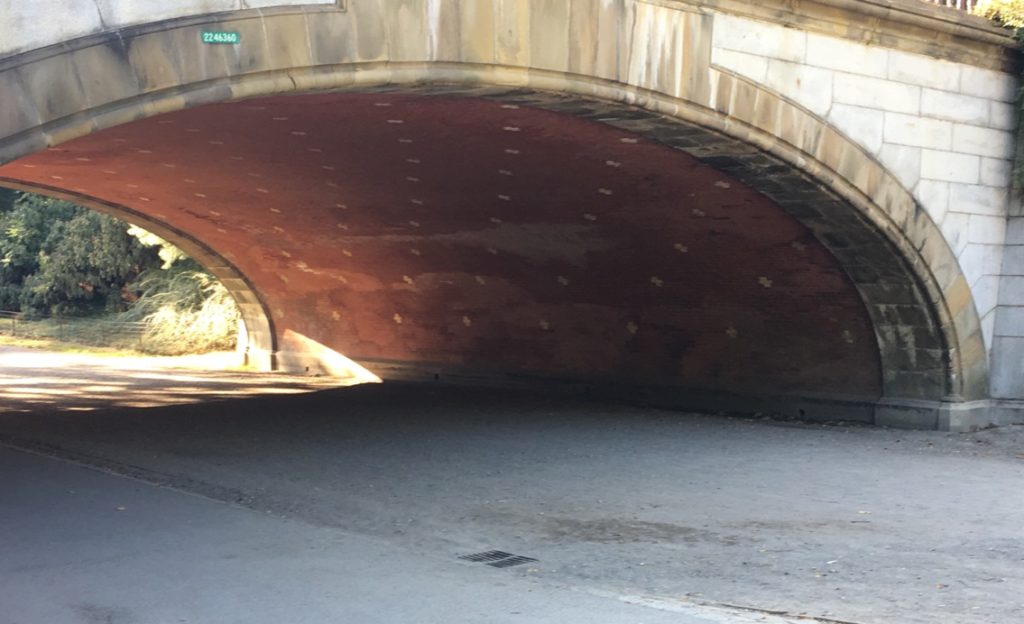
Ground, Breath, Time
Uncertainties, disruptions, demands rise these days. Our individual choices in response, and our use of the instrument of self in making choices, are key to remaining effective in our shared and shifting conditions.
We have reliable stabilities. Gravity, for instance, never goes away. The ground is a universal and constant source of support. We evolved on Earth with this specific constant force to be upright, bipedal, responsive and verbal creatures. We are made to move easily with gravity, and to relying on the ground as our source for movement.
Our cooperative strength with gravity is the tidal and constant movement of breath. The tricky bit is not making breath happen (particularly challenging in the global startle pattern we are experiencing), but in welcoming, receiving, allowing, using our attention to request a total response that brings a fullness and ease to being supported by breath. We can ask the breathing container of self to connect us to the ground, and the ground to be our source of elastic response. We can ask to express on the exhale and await the next invisible fullness with curiosity and quiet. We can welcome and wait.
A key element in welcoming a new response so that we can dynamically not interfere is simple, but not easy. Walter Carrington is noted for emphasizing this thought: I have time
It only takes a micro-second, a dynamic moment of pause, a welcoming wait to recall that the ground always supports an upward elastic response that breathes and moves. You have time to allow the ground and your breath to support you. You always have this time.
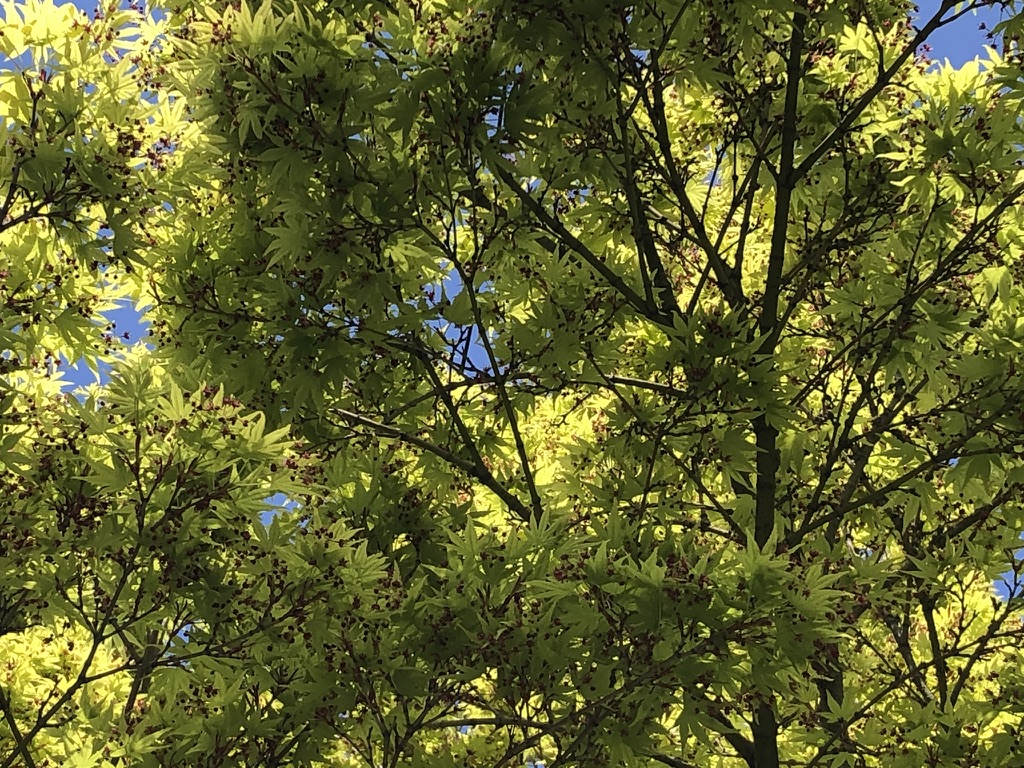
Still walking here
The previous pace and spatial/social exploration of life has dramatically changed. Instead of our regular routes to school, work, grocery, theater, coffee shop, many of us are home, interacting on screens, restructuring our sense of self without any of the previous signals, cues or assumptions.
The person I played when I could teach hands on Alexander lessons, take public transit to visit friends and family, schmooze at the coffee shop has been put into re-run only status. Hopefully, there will be a new season.
One step at a time defines how we live now. We can’t hurry the outcomes, nor slow the various disasters, but we can find our own means and welcome dynamic pauses.
We can go as quickly as we like without hurrying and as slowly as we like without freezing. Pace is unimportant in terms of our own use of self.
I am currently walking many miles daily, not because I am end-gaining to a mileage result, but because walking as an experience helps me indirectly sort out current general experience.
It’s Spring, trees leaf and bloom, birds from wrens to eagles are visible and audible, humans wave and smile as they walk, and if some humans come too close, I do my jaunty sidewalk step aside.
Step by step is all we can do just now. Seeing, hearing, welcoming becomes our dynamic pause.
I walk to see, hear, welcome.
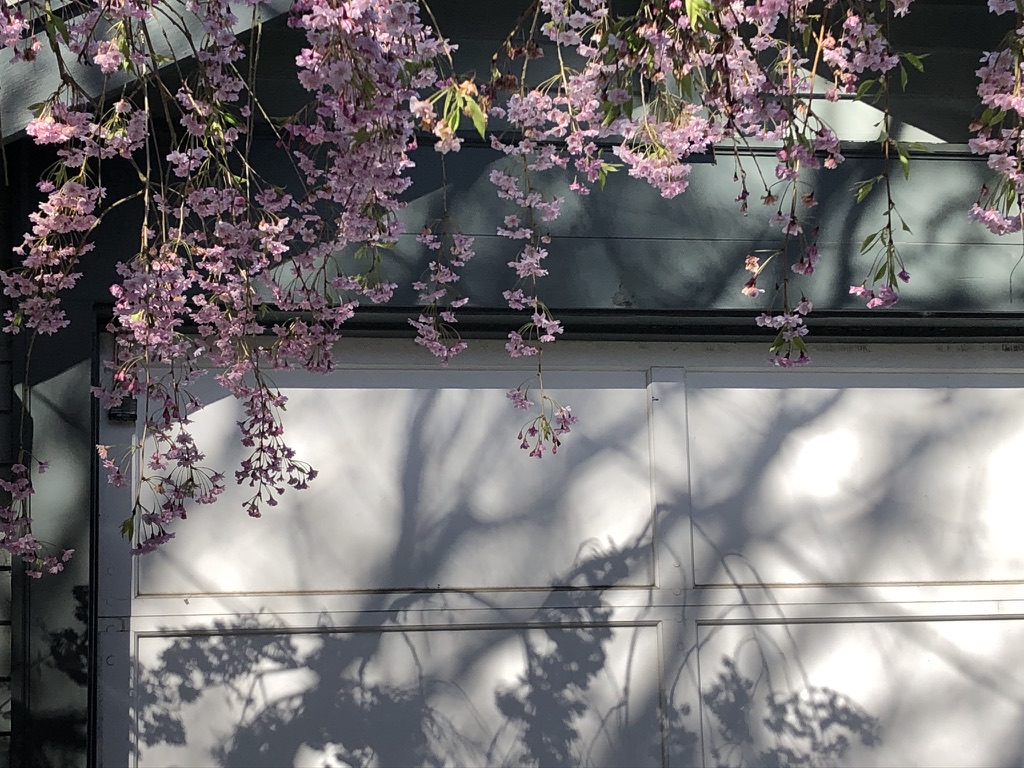
Undoing to new demands
Life is far more demanding for all of us these days. And yet, we have choices in response, means of resilience, ways to remain effective in the weird world in which we now operate.
Our constructive response won’t change the heightened times in which we live, but may give us more options in remaining effective, calm and even curious as events unfold. Our primary tool is our attention. How are we doing what we are doing, on all levels of awareness? What choices can we make that will support being effective, and what controls can we relinquish to quiet tension and anxiety?
In “normal” times, I wake and begin my teaching day early. I allow time to stroll to my office, explore some Alexander procedures, and to be at ease for my first student of the day. I design my schedule according to my best condition of self in teaching. I am not serving the “market”, I am making best use of my choices to do my work well. I am undoing into demands, not serving demands.
In these abnormal times, my sleep is disrupted, inadequate and unsatisfying. More sleep is needed to be effective, responsive and innovative. I can adjust my waking schedule in the interest of best outcome. I can, in general, adjust for best outcome.
The question becomes, for all of this as this surreal uncertainty continues, what choices can I make for best use of myself? Can I notice how I do what I do and decide if that is how I want to do it? What conditions are beyond my control so I can relinquish worrying about them? Where can I allow myself some room to remain effective?
Where is the ground? (and am I allowing gravity to suspend me upward?)
Where is my attention? (is that where I want it to be?)
How much less can I do/fix/be right? (how much more can I allow gravity and breath to support me?)
We gather our data, and curiously notice how we do what we do, and then we can make choices. We undo into the demands and discover our best response. We welcome gravity, notice our own rhythmic internal response, allow the script to unfold.
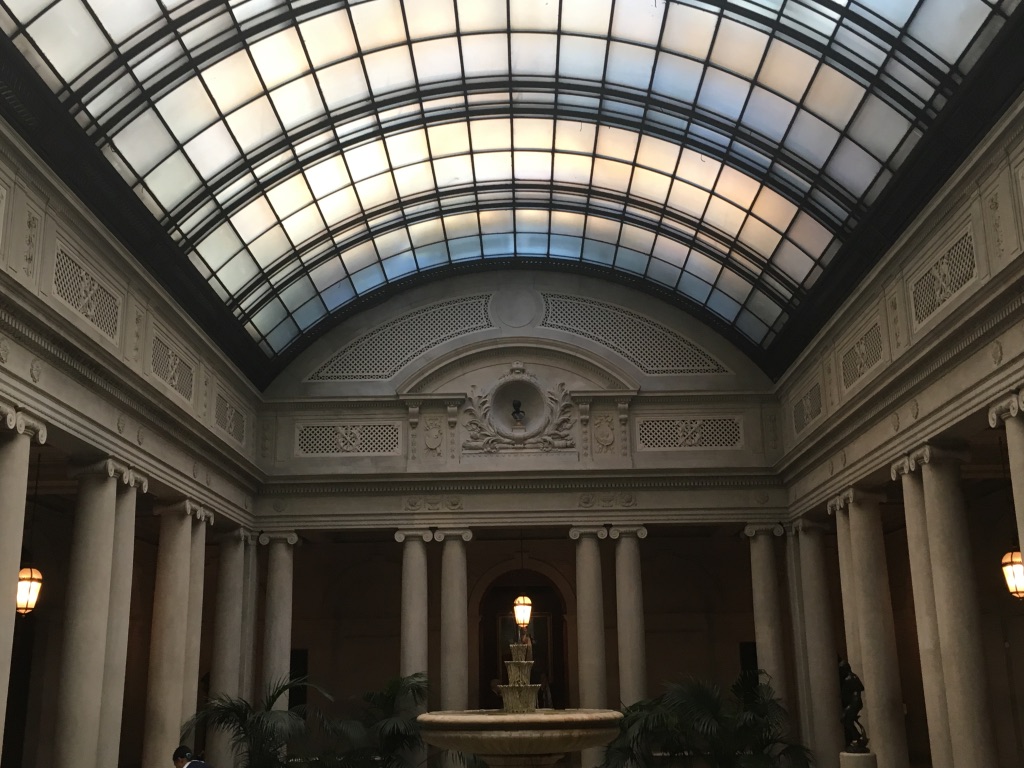
Face mask smile
Face masks are now recommended for any time we spend in public spaces. This adds another layer (literally and figuratively) to how we use our instruments of self. In a short amount of time, we have adjusted to teaching, learning and connecting through the glowing screen. Now, even in real space and time, our faces are covered. We connect via screens and we are partially screened when we can connect in actual time and space.
When I first began wearing a cloth mask, I felt as though I had to shout through the fabric. I couldn’t hear my voice in the space around me in the same way as sans mask. Then I recalled that my voice comes from my entire resonating instrument, and that pushing through the fabric would narrow and limit my instrument rather than express my voice. Opting for less push, more of the ground and a fully breathing back reduced strain and distress.
It was vaguely confusing to not see neighbors’ facial expressions, and to know they could not see mine either. Friendly waves resolved that issue, and notably calmed my heightened nervous system. Acknowledging or initiating a wave has become a new means of easing concerns, connecting in crisis, and remaining in community. There are also head nods, slight bows, and the jaunty and cheerful sidewalk step aside.
We are all learning to refine and adjust quickly these days. We can remind ourselves that we have the big brains and the unified fields of self to do so.